Highlights
-
A new soil structure is being proposed to remove solutess from a salty water drip irrigated the root zone.
-
Soil texture directly affects water and solutes flow in a porous media. Therefore, by changing the texture distribution at the root zone, it is possible to control water flow and salt accumulation patterns.
-
It is suggested that combining coarse sand at the core of the root zone with finer sand around it may increase salt leaching, and maintain sufficient water and nutrients supply to the plant at the same time.
Manipulation of soil texture for removal of salts beyond a salty water drip irrigated root zone.
Abstract
Soil salinization is becoming a great threat to the environment and agriculture as current irrigation practices are unsustainable. One of the causes to soil salinization is salty water drip irrigation which is applying accurate and low amount of low quality water. Drip irrigation enhances wetting of small area of the soil and low leaching rates.
The comnbination of low leaching and high Evapotranspiration rates, which is common in arid and semi-arid areas, promotes salt accumulation at the root zone. This may lead to soil salinization, decrease yield and increase soil erosion.
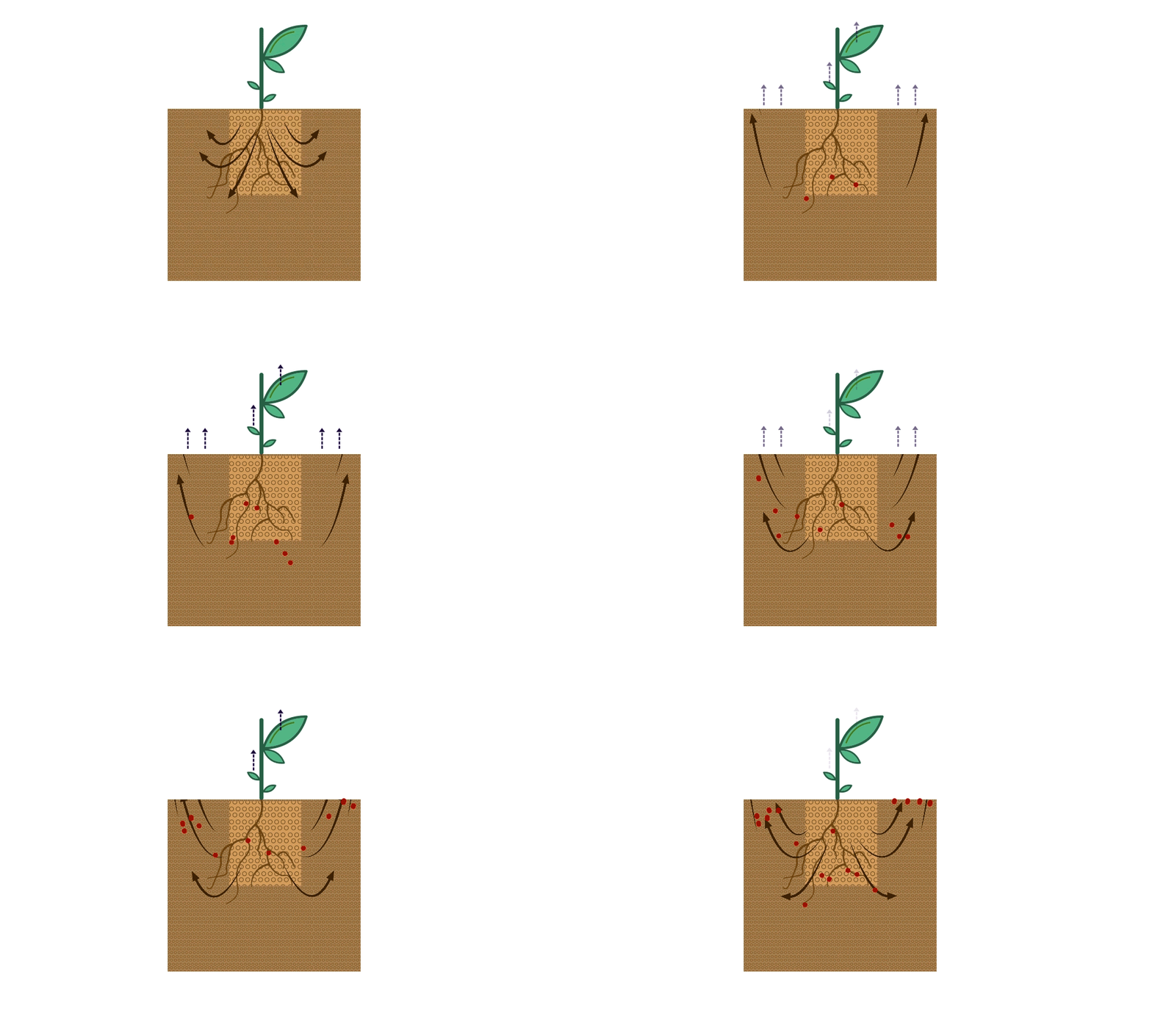
This work suggests that manipulation of soil texture distribution can enforce salt removal from the root zone and create preferable growth conditions. The manipulated structure is comprised of coarse sand segment at the core of the root zone, surrounded by finer segment as presented in the next figure.
This manipulation provides enhanced salt leaching rates and at the same time sufficient water and nutrient supply to the plant, as the coarse segment is characterized with low water retention ability, and high leaching rates, and the finer segment supports high water content.
Furthermore, the capillary barrier between the two sand textures prevents salty water from flowing back to the root zone by convection, unlike normal conditions with relatively homogenous fine soil, where water and solutes flow upward to the surfave where evaporation is high.
Lysimeters and Hele-Shaw experiments were carried out to examine salinity, water content and roots distribution of the suggested soil structure, in comparison to other structures.
The results had consistently shown lower salinity rates and high roots concentration in the manipulated structure, compared to the homogeneous structures.

Lysimeter experiment in Gilat research center.

Conceptual model of the maniplated soil structure.

Manipulated structure lysimeter. coarse sand in the middle, fine sand surrounding.


Salt concentration and root distribution in the Hele-Shaw experiments. Soil salinization is presented by the colored surface plots and root distribution by the contours. White numbers on the contours represent values of root weight (gr) per soil volume of 125 cm3. (A-B) for the two homogeneous fine sand setups and (C-D) for the two manipulated soil experiments.
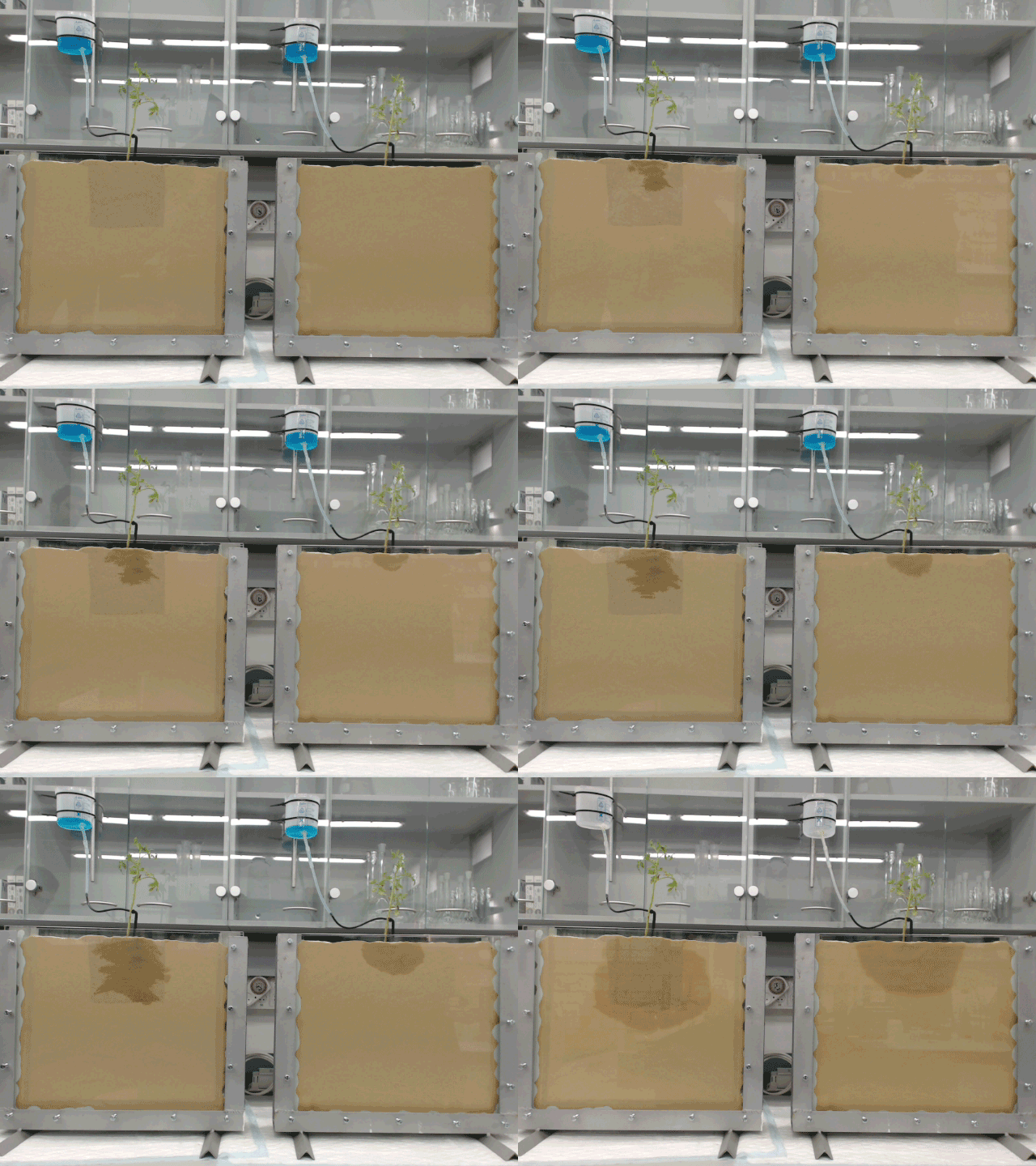
Wetting differences throughout first irrigation between the homogeneous fine sand (right), and the Manipulated soil (left). the Manipulated soil showed larger and narrower wetting area than the fine as a results of the low water retention of the coarse sand at the middle of the Manipulated soil.

Hele-Shaw experiments with colored water. (a) large scale view of both soil setups; (b) enlargement of the area close to drip irrigation in the manipulated soil (mani.); and (c) enlargement of the equivalent area in homogeneous fine sand. Dashed gray lines mark the coarse-fine sand interface in the manipulated soil.
Salt precipitation at the fine sand structure, indicating on high salt concentration, in accordance with the EC results. On the other hand, at the Manipulated structure salt precipitation was not observed.
SEM analysis of salt precipitation on fine (right) and coarse sand (left). While minimal precipitation was observed at the coarse sand due to low water retention, a salt crust was formed at the fine sand due to high water retention which enables high evaporation rates from the surface.